The RC drift glossary: every term, decoded
Ten minutes near a drift track and you will hear at least four terms you do not recognise. This is the translation, without jargon.
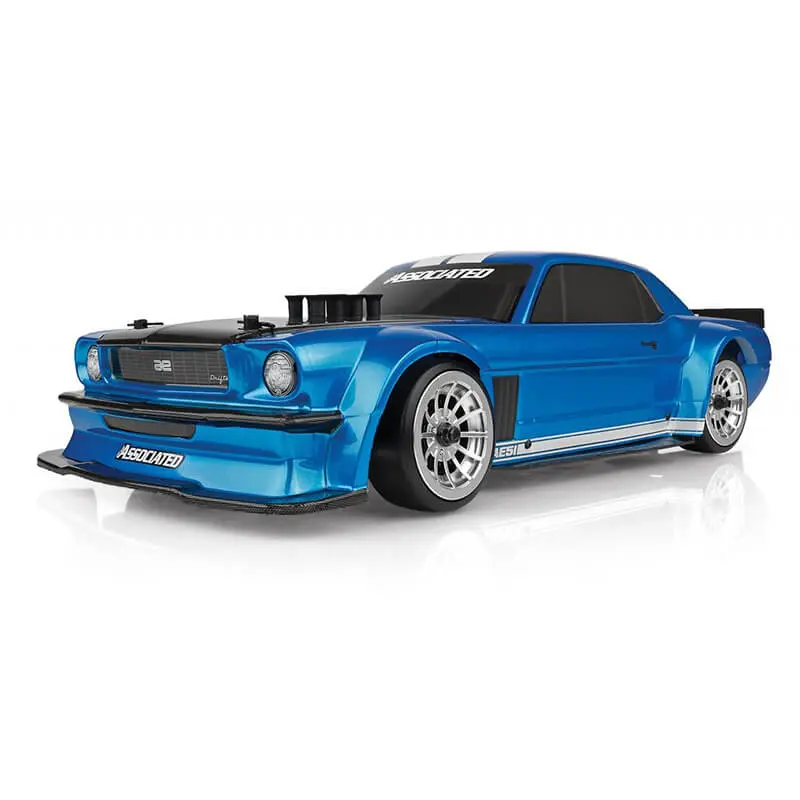
If you have spent 10 minutes near an RC drift track, you have heard at least four terms you do not recognise. Most glossaries online explain the jargon in more jargon. This one does not.
The terms you will actually hear
Angle — how far sideways the car is through a corner. More is better, up to the point where it stops.
Initiation — the action of starting a drift. Can be throttle, handbrake, or weight transfer.
Transition — switching the direction of a drift mid-corner, usually through an S-bend. The hardest single skill in drifting.
Clipping point — the inside corner you are aiming to brush with the back of the car.
CS (counter-steer) — how far the front wheels can steer into the opposite direction. See our CS setup guide.
P6 / CS tyre — two common drift tyre families. P6 is softer, more forgiving; CS is harder, more predictable.
Shore — hardness rating of a tyre. Higher = harder = less grip. Drift tyres run 35–42 shore.
Spool — a solid rear axle, no differential. Standard on drift cars. Unusual in racing.
Gyro — an electronic steering assistant that counter-steers faster than your thumb can. Essential.
LiPo — lithium polymer battery. 2S (two cells, 7.4V nominal) is the drift standard.
EPA — endpoint adjustment. A transmitter setting that caps how far servos can move. Never run below 100% on steering unless you are limiting CS mechanically.
Toe — wheel angle relative to the chassis, seen from above. Positive toe = wheels point in; negative = out.
Camber — wheel angle viewed from the front. Negative camber (top leaning in) is standard on drift cars.
Caster — kingpin axis angle, seen from the side. More caster = more self-centring steering.
Kingpin — the steering pivot axis. Lean and caster adjustments happen here.
Shock oil (WT) — weight of oil in the shocks. Heavier = slower rebound.
Wheelbase — distance between front and rear axles. Measure before buying a shell.
Shakedown — first run after assembly, just to confirm nothing falls off.
RWD / AWD / 4WD — rear-wheel, all-wheel, four-wheel drive. AWD and 4WD are usually interchangeable in drift context.
Brushless — sensored or sensorless. Sensored is the drift standard.
ESC — electronic speed controller. Think of it as the volume dial between battery and motor.
Drift mode — an ESC feature that smooths low-end throttle response. On for drift. Off for racing.
T-count — motor turn count. Lower = faster; higher = more controllable.
Hop-up — any aftermarket upgrade part.
Hoonigan — a specific paint livery and aesthetic from the Ken Block / Gymkhana era. Very common on RC drift body shells.
Stance — how the car sits. Usually refers to camber, ride height, and wheel offset. Subjective; much discussed.
Track night — an open session, usually £10–£20, at an indoor carpet venue.
Club night — a member-organised structured session, often with informal competition.
Spec class — a class with restricted parts (e.g. all 17.5T motors, all stock electronics) to emphasise driving over budget.
Tandem — two cars drifting in close formation. Hard. Impressive when done well.
Chase run — the trailing car in a tandem, scored on proximity.
Lead run — the leading car in a tandem, scored on line and angle.
Judged comp — a competition scored by judges rather than lap time. Standard format for drift.
Idle mix — a transmitter setting that holds the throttle slightly above zero to prevent motor stall during slow sections.
Oversteer — when the rear loses grip faster than the front. All drift is oversteer on purpose.
Understeer — when the front loses grip first. Bad in drift. Often a CS or tyre issue.
Brake bias — how much braking goes to front vs rear. Rear-biased for drift (helps initiation).
Rear toe-in — the standard 1–2° of rear toe-in most drift chassis run for straight-line stability.
Kingpin inclination — kingpin lean angle from vertical. Affects feel on turn-in.
Scrub radius — distance from kingpin centreline to tyre contact patch. More is usually worse for steering feel.
If you read one other article next
The tyres explainer. Most terms on this list rely on understanding what the tyre is doing first.
Kit to build what you just read
All drift gear →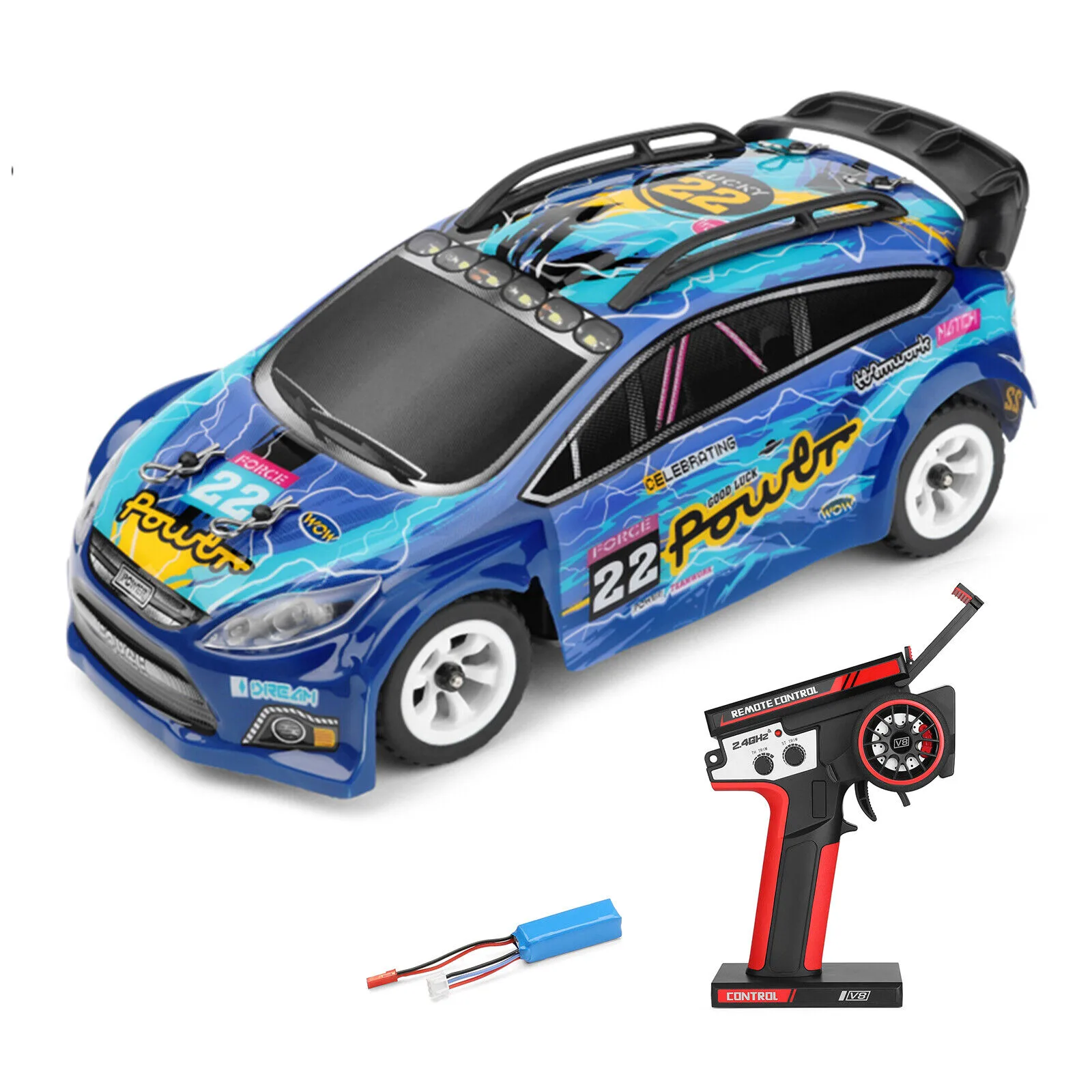 Save 25%
WLtoys 284010 2.4G RC mini drift car
£41.99£55.99
In stock
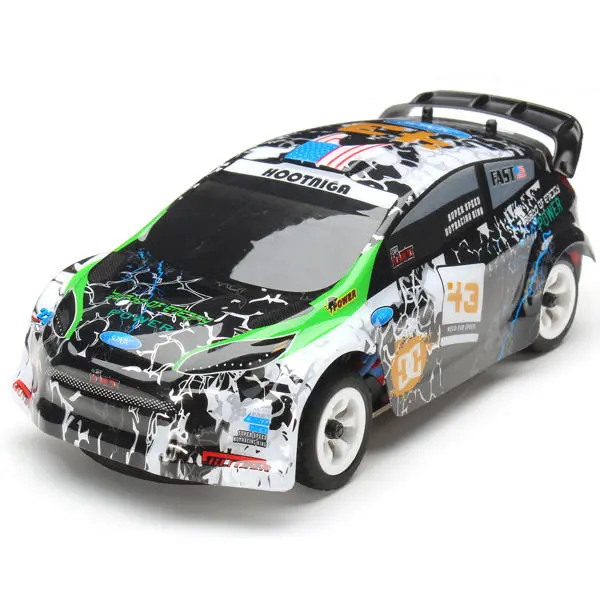 Save 34%
WLtoys K989 2.4G RC mini drift car
£36.99£55.99
In stock
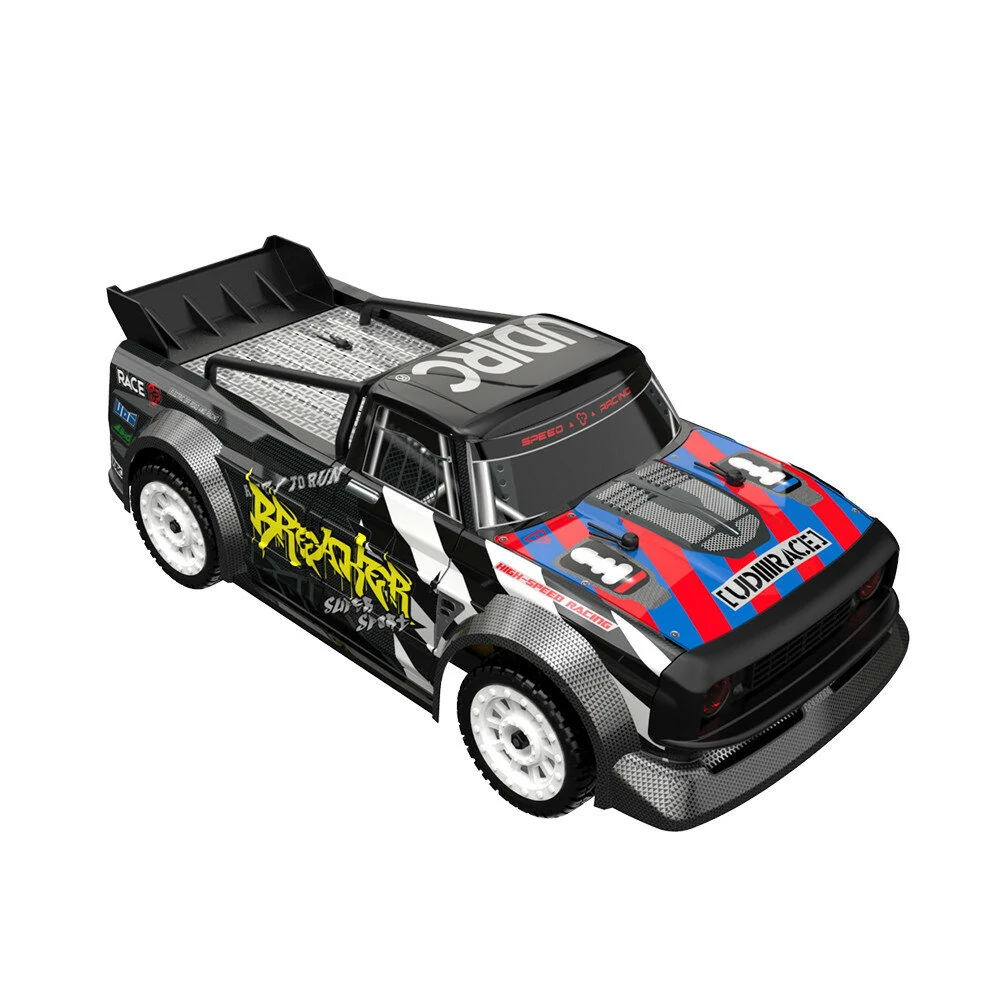 Save 11%
UDIRC 1601 Pro Brushless 60km/h Upgraded RTR 4WD RC Car
£79.99£89.99
In stock
 Save 29%
Keep reading · Beginners
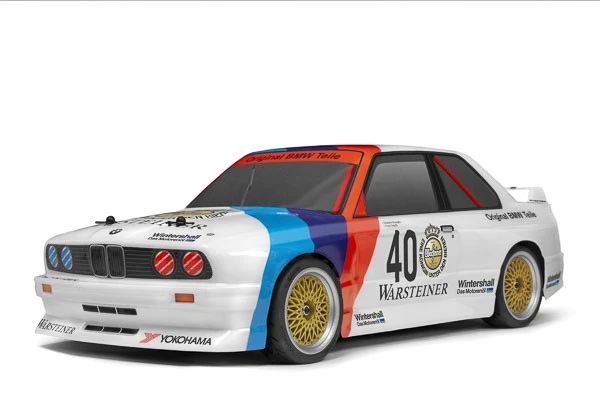
Your first £400 RC drift build, parts list included
£400 is the realistic floor for a drift car you will still be running in a year. Below that, you are upgrading within the month.
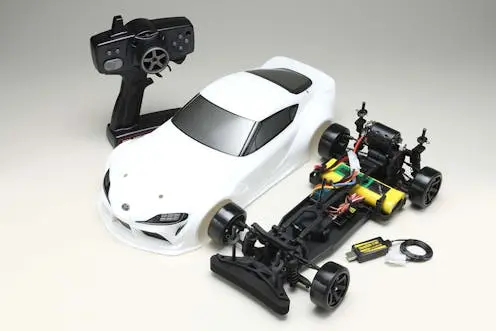
What is RC drifting, and why it hooks people instantly
A scale discipline obsessed with throttle control, tyre physics and holding a line nobody asked you to hold. An introduction for the curious.
RWD vs AWD: which drift chassis should you actually buy?
The honest version — not the forum version. Who should buy RWD, who should buy AWD, and why the answer has changed in the last two years.